HALIFAX – The Economic Development Working Committee heard a presentation on potential opportunities, relating to offshore power generation, for Indigenous communities in Nova Scotia.
Marine Renewables Canada’s Executive Director Elisa Obermann spoke to Economic Development Committee members at a November 26th meeting in Halifax, presenting on potential opportunities for Indigenous participation in offshore wind projects in Nova Scotia.
She told committee members that opportunities and benefits could include 30,000 potential direct jobs during construction, as well as continued employment across the (25-30-year) life cycle of a potential wind project. Employment benefits of offshore wind are greater than onshore turbines, Elisa explained, because operation and maintenance require more labour than onshore turbines, providing more long-term employment.
Elisa identified investment and equity partnerships, local hiring and training, and opportunities for Indigenous-owned business to participate as potential benefits from Indigenous participation in the project.
A supply chain assessment carried out by Marine Renewables identified support for Indigenous involvement in wind generation industry development as a priority, achieved by educating developers on Indigenous equity options, and by integrating Indigenous business into a potential supply chain.
Committee Questions
The committee asked about the environmental impact, and heard that the seismic, drilling and construction stages are where the most environmental impacts would be felt, with the turbines disrupting wildlife minimally once operational.
Elisa, and committee members and chairs discussed the costs, and the benefits relative to other forms of generation, particularly how offshore wind generation is quickly becoming a competitive option, price-wise, and how KMKNO’s existing and ongoing renewable energy initiatives could integrate into a potential offshore wind generation project.
The committee also asked the export opportunities, learning that Nova Scotia has been identified as well-suited to build a supply chain to export wind generated electricity in a report by Xodus Consulting and partners.
Context
Nova Scotia itself doesn’t have any offshore generation infrastructure, but is is ideally situated, with good wind speeds and a suitable seabed for wind turbines.
The motivation for developing offshore wind electricity in Nova Scotia includes the need for clean electricity, decarbonization and electrification of buildings and industry, energy security and resiliency to meet demand and protect against volatility.
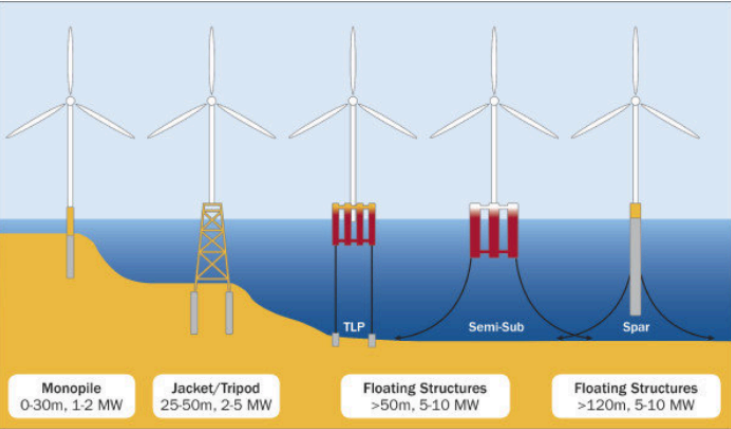
Committee members heard that an offshore wind project could generate economic opportunities for workers, capitalizing on Nova Scotia’s existing expertise, experience and infrastructure. Elisa described the different kinds – fixed and floating – of offshore wind turbines, the evolution of the technology to produce more power at a lower cost, as well as the planning, construction, operations and maintenance and eventual decommissioning of any offshore wind turbines.
Potential markets for marine wind-generated electricity include the Nova Scotian, and national grids, as well as possibly even the American electrical grid. The power generated from offshore turbines can also be used in the production of green fuels, such as hydrogen and ammonia, and utilized by heavy energy-intensive industries.
With the necessary regulations in place, energy areas designated for potential wind farms, and ongoing engagement underway, any potential project is in early stages, with a call for bids expected from the regulator in early 2026.
The first call for bids will focus on three areas – Sydney Bight, Middle Bank and French Bank – with the intent to generate between three and five gigawatts of electricity.
Marine Renewables Canada is a 200-member national industry association for offshore wind, tidal, wave and river current technology, advocating, developing and educating on renewable energy.