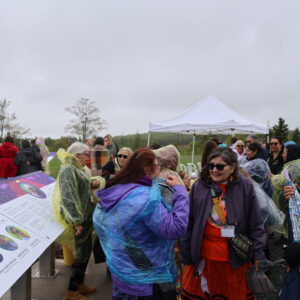
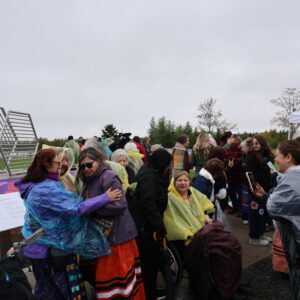
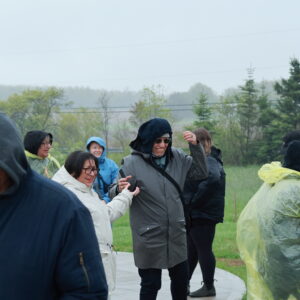
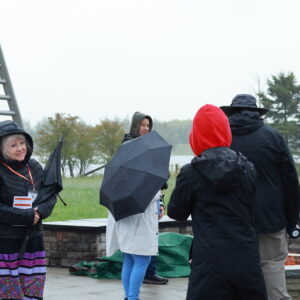
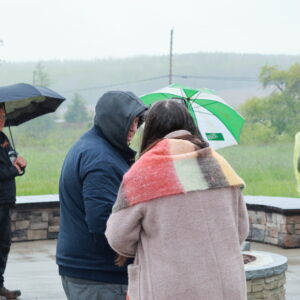
SIPEKNE’KATIK – The rain and wind didn’t stop the crowd that showed up to commemorate a pivotal historic moment for Survivors in the Shubenacadie (Sipekne’katik) area – and beyond.
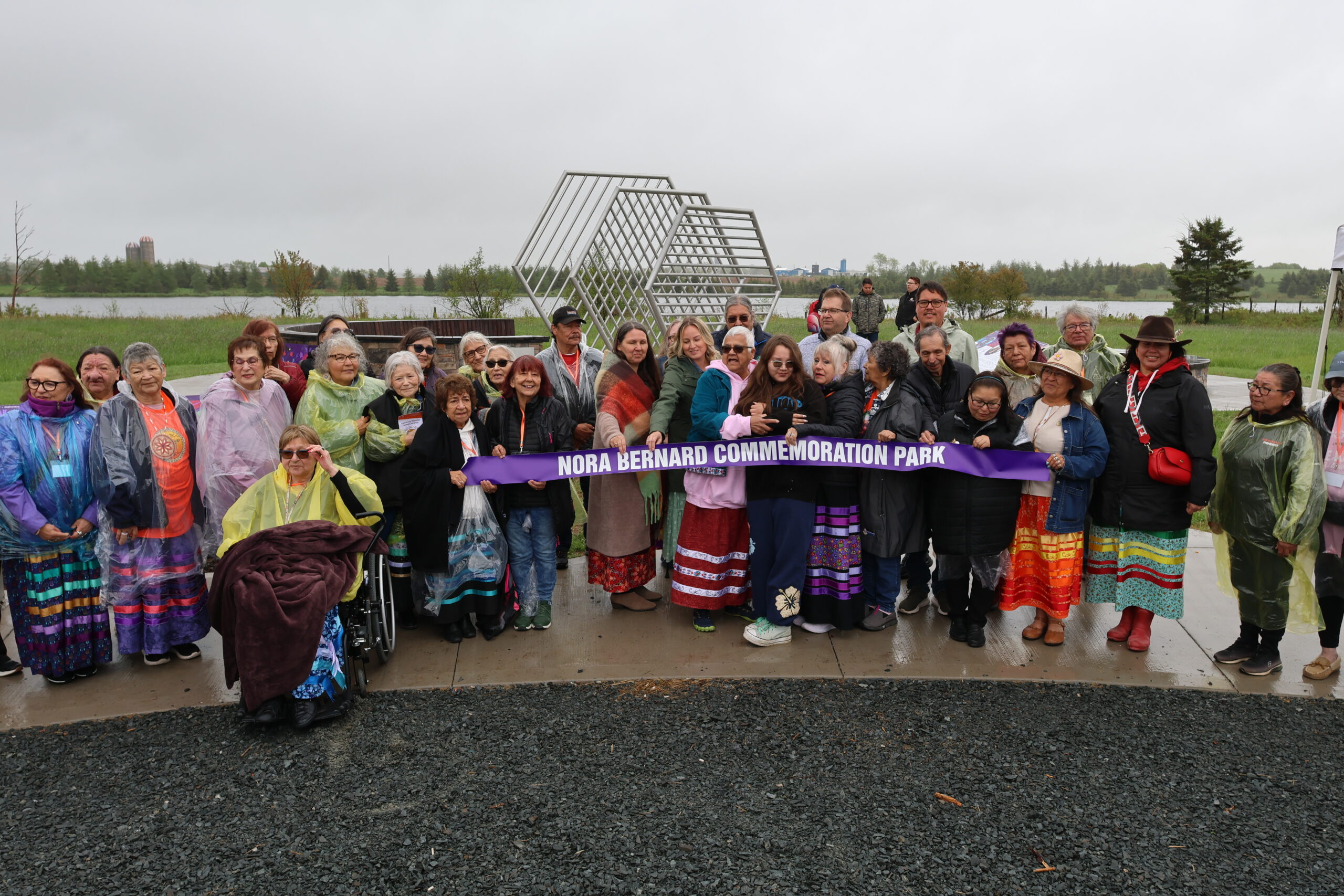
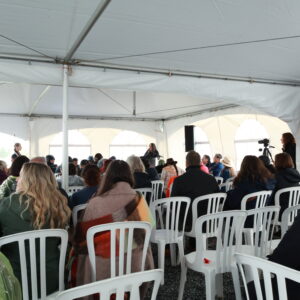
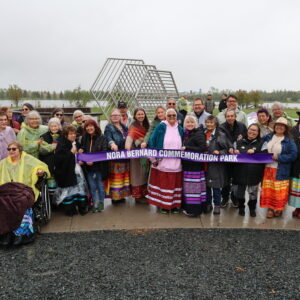
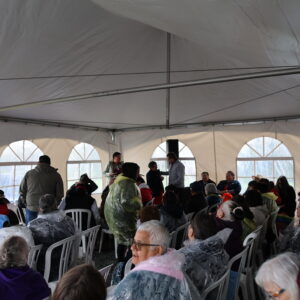
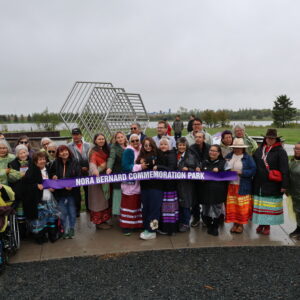
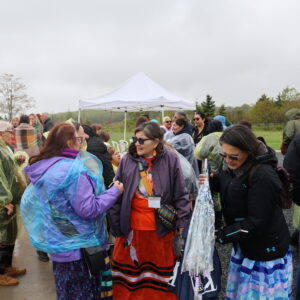
The Nora Bernard Memorial Park was officially opened before a crowd of more than 200 people the morning of May 28.
This official opening was the culmination of seven years of work by Mi’kmawey Debert Executive Director Tim Bernard the Mi’kmaq Co-Chair for the Culture and Heritage Working Committee of the Tripartite Forum, and Survivors of the Indian Residential School (IRS) system.
While the occasion – and weather conditions – were somber, Senator Dan Christmas noted that, “although it’s cold and wet, I think we can take it that the Creator has given his presence here by washing away the pain, but then he filled us with a lot of love and laughter and smiles, so the warmth comes from us.”
People shared that warmth, celebrating the park, which honours Survivors of the Indian Residential School (IRS) system, and is named after Nora Bernard, who launched the historic class action lawsuit against the federal government on behalf of all Survivors.
“I’m not sure what it is, maybe it’s the river, maybe it’s all the beautiful greenery around us, maybe it’s the eagles who live here, but there is something very, very special,” Senator Christmas said. “It’s hard for me to put in words but there really is a sense of place here.”
The project that guided this process was the Shubenacadie Indian Residential School (IRS) Legacy Project, which entailed thorough engagement of survivors of the IRS system, and work with Sipekne’katik First Nation to determine and prepare an adequate site for the project.
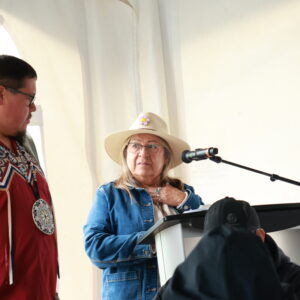
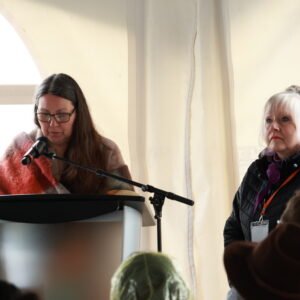
“Today is not only a ceremony,” said Doreen Bernard, a member of the Survivors Circle, whose knowledge and experience informed and guided the IRS Legacy Project.
“It is an act of truth, an act of love, and an act of responsibility. Commemoration is to only about looking backwards; it is also about what we choose to do now.”
“Thank you for your courage, and your leadership, and your generosity, and sharing your truth. Healing happens in community, in remembrance and reclaiming of identity and belonging. Healing happens in forgiveness and unconditional love, and that is what we want for all our loved ones. May we continue supporting the Survivors and their families. And may we continue building a future, grounded in respect, justice, language, culture and love. When we remember, we honour and we stand together,” she added.
Among those in attendance were the daughters of Nora Bernard, Janice Blenkhorn and Natalie Gloade, who expressed gratitude to all who worked together to make the park a reality.
“We express our utmost appreciation and deepest respect for this honouring of our leader, mother and grandmother, Nora Bernard. Your recognition is received with humility, gratitude and love,” said Janice.
“This park will offer a place to our people to gather for years to come…may all those that visit this park find peace within themselves.
Natalie described Nora’s legacy, her hospitality and willingness to listen, saying, “A day doesn’t go by when I don’t think of our mother and the life she lived. It’s very powerful to be here, and to knot hat she is with our ancestors. At first, I saw the rain and shed a few tears, and thought, ‘there should be sunshine, it should be warm,’ and then driving not far from here, I see a big eagle that came down, very close to the vehicle I was in, and that was a sign. It was like she was saying, ‘It’s okay, it’s going to be a beautiful day.’”
A Long Journey
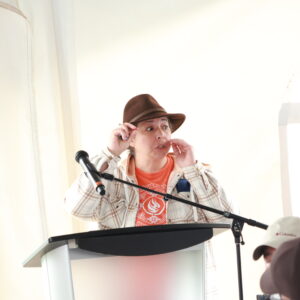
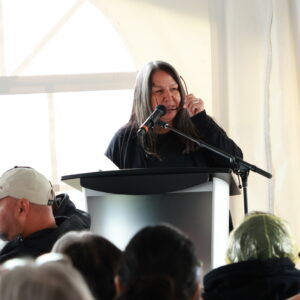
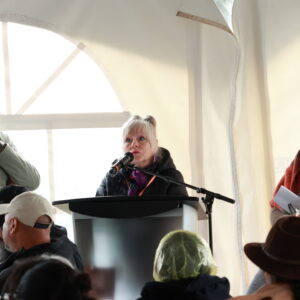
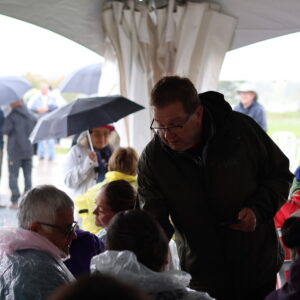
“It’s been a journey to get here. Today is a meaningful day for many Survivors, descendants, families, community members, Elders, youth, partners and friends. I want to acknowledge our survivors…and offer my thanks for your strength and guidance,” said Tim to the crowd gathered under and near a large tent keeping out the wind and the rain.
“Today, people may see a sculpture, a gathering place, a park. It certainly is all those things, but this space holds so much more than that. It holds memory, it holds truth. It holds reflection, and it holds the care and guidance of survivors who helped shape it,” he added.
Tim praised the legacy of Nora Bernard, noting that her work changed the country.
“Long before the residential schools became part of the national conversation, Nora was gathering testimony from Survivors, listening to experiences many institutions and governments were still unwilling to confront. Her impact continues to be felt everywhere in this country. Together we gather in a place that carries her name and will carry her spirit forward,” he said. “This park has taken many years of work, collaboration and care. It’s been about a seven-year journey for me.”
The plan to make the Nora Bernard Park a reality heeded the Truth and Reconciliation Commission’s 94 Calls to Action and policy recommendations and included the designation of the park as a National Historic Site of Canada.
“This is a place for ceremony, for quiet moments, for conversation, for teaching, and for future generations to come and learn,” Tim said, concluding his remarks. “I hope people who visit here feel the depth of what we carry into this space, not only grief and remembrance, but also love, resilience, and connection. Nora Bernard helped create a path toward courage, persistence and deep love for her community. Today, we honour that legacy together.”
Councillor De-Anne Sack of the Sipekne’katik Band, spoke with praise about the resilience and willingness of IRS Survivors to, “walk forward, despite everything that was taken from you, and everything that you enjoyed.”
“We honour those who never made it home. We honour the children, whose names, we know and whose names we may never know,” Councilor Sack said. “Today is also significant because this monument stands on land that Sipekne’katik intentionally worked to reclaim and protect for future generations. This land is sacred. Our community purchased this land and worked through lengthy and often arduous addition to reserve process and engaged with community members.”
This process was undertaken to create a permanent place of reflection and truth within Sipekne’katik.
“This monument is more than stone, metal and a design. It stands as a permanent reminder of truth, a truth that Indigenous people had carried for generations; a truth that Survivors barely spoke, gone before Canada was prepared to listen,” she added.
Artist Reflects
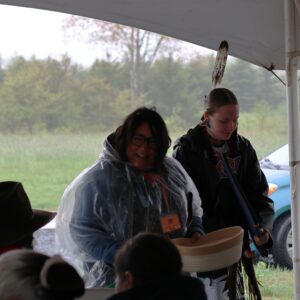
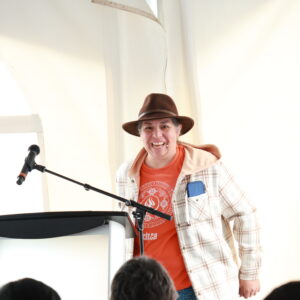
Ursula Johnson, lead artist behind the design of the park told guests that as a descendant of IRS and Indian day school Survivors, “I carry a deep responsibility in standing here today.”
“At sunrise on September 30th — just before the National Day for Truth and Reconciliation — sunlight moves through stainless steel forms and casts the shadow of a Klokowej, a star basket-weave pattern, onto the ground,” Ursula Johnson, lead artist for Wejkwa’lukwet: Dancing Towards Us, the central feature of the park, explained.
“For me, that moment carries something powerful. Because the light only fully reveals the work when the conditions are right. In many ways, truth works like that too. For generations, Survivors carried truths the world refused to see or hear. But they kept speaking. They kept calling out in one voice. And because of that, the truth could no longer remain hidden.”
Ursula told guests that the project was never about creating an object; it was about listening carefully to Survivors who said they did not simply want a “monument to pain.”
“They wanted a place for reflection, a place for ceremony, a place for healing, where future generations could come and understand not only what happened here, but the strength of the people who survived it,” Ursula said.
That concept eventually became Wejkwa’lukwet the main, and most prominent feature in the park.
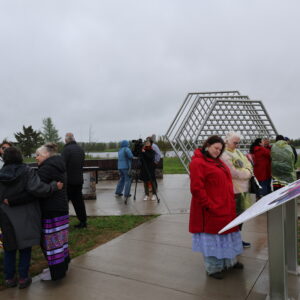
The Nora Bernard Commemoration Park features an art sculpture designed by Mi’kmaw Lead Artist Ursla Johnson, and Wolastoq Artists Emma Hassencahl-Perley, and Michelle Sylliboy, which interacts with sunlight throughout the day, casting shifting patterns of light and shadow across the park space, reflecting the passage of time – and serving as a metaphor for the ongoing, changing healing journey of residential school Survivors, reflecting themes of reclamation, hope, love, gratitude and respect.
It is located across from Snides Lake, across from the original site of the Shubenacadie IRS.
Nora Bernard Park also features Mi’kmaq hieroglyphs that, translated, read: “We are strengthened because they called out in one voice.”
“To me, those words hold the heart of this entire project. This place exists today due to the courage of Survivors,” Ursula said.
The Project
Construction work on the park wrapped up recently, the last of four phases, which included the creation of a promotional video explaining the purpose behind the project, environmental and archaeological assessment work, and survivors’ gatherings and the Survivors Advisory Circle, accumulating Knowledge from IRS survivors from 11 Mi’kmaq Communities to ensure their legacy is respectfully represented by the park and its installations.
The project also entailed researched into missing children and burial sites, a healing gathering, the designation of the location of the park as a National Historic Site, and the development of commemorative art pieces for the park by Mi’kmaw artist Ursula Johnson.
Funding for the project came from a variety of sources, including Crown-Indigenous Relations and Northern Affairs Canada (CIRNAC), Parks Canada and the Tripartite Forum’s Project Fund for Social and Economic Change.