A sacred mountain in Unama’ki (Cape Breton) is about to officially receive its proper Mi’kmaw name, with Kellys Mountain poised to receive an Indigenized facelift, with an educational twist.
Speaking to fellow committee members at a Culture and Heritage Committee meeting in June, Darrell Bernard reported on how he is pulling together the final steps in a project that will see Mi’kmaq signage posted on Kellys Mountain.
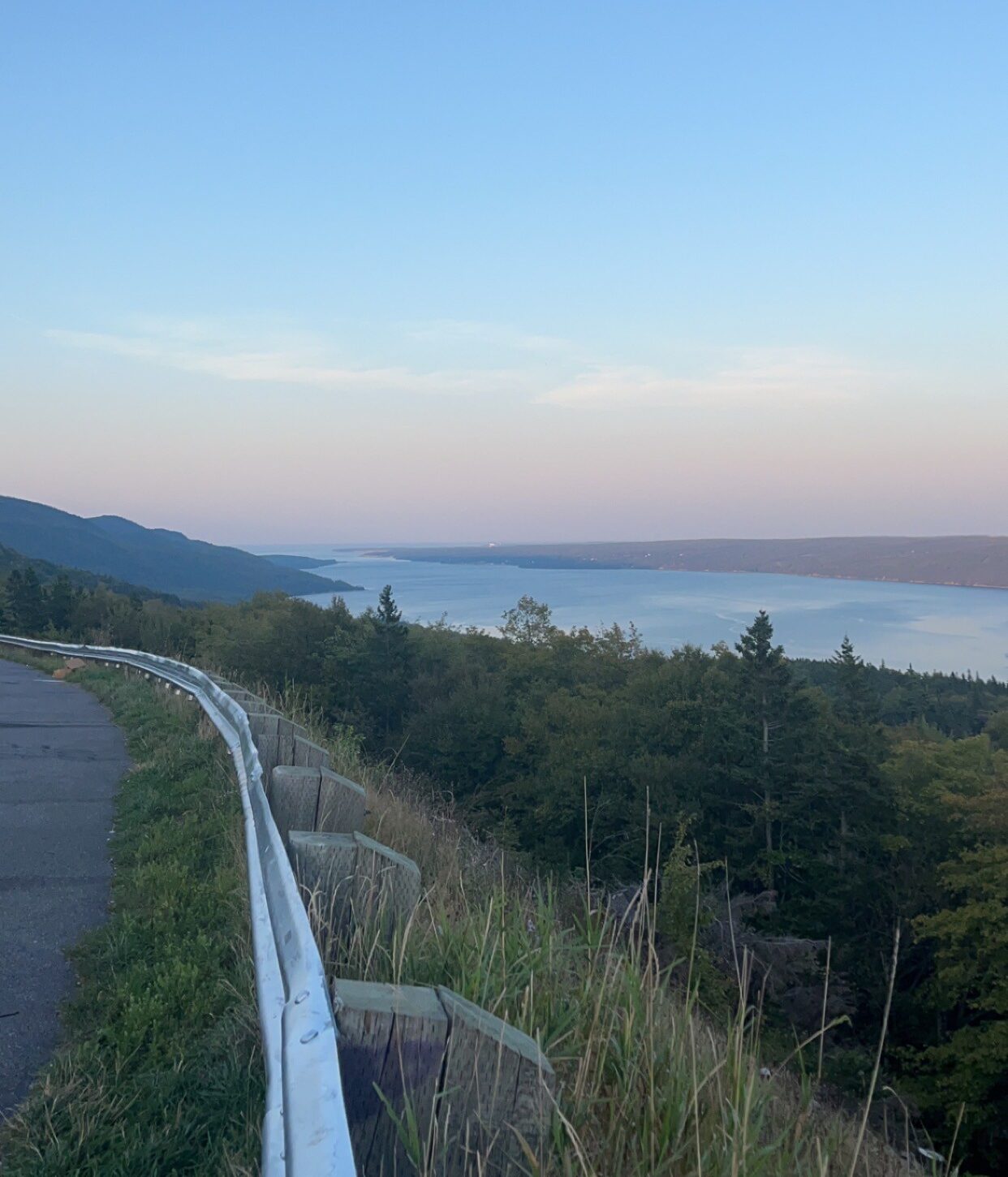
Kellys Mountain – known to Nova Scotia’s original inhabitants as Mukla’qati (‘Place Where the Geese Land’) – is cut through by a rugged, steep section of Route 105, in Victoria County, near the Seal Island bridge, Great Bras d’Or Channel and Boularderie Island. It is a sacred site to the Mi’kmaq, considered the traditional home to Glooscap.
The additions to the Mukla’qati/Kellys Mountain site will include four signs – two large ones at the bottom of the mountain, near the highway, and two near the lookoff near the top. The signs will be set back and high enough away, that they won’t be interfered with by vandals who frequent the area, leaving graffiti.
Each sign will be designed with a QR code linking to a website sharing historical information about Mukla’qati and the Mi’kmaw communities in the area that existed prior to the inhabitants’ dispossession. Darrell told committee members he hopes to include local tourism information that website as well.
Darrell, the Cultural Manager with the Union of Nova Scotia Mi’kmaq (UNSM), told committee members he has recruited Mi’kmaq Artist Loretta Gould to design the signs. The signs themselves are being funded by the Province, and the design for the signs is being funded by Destination Cape Breton.
The revitalization and Indigenization of Kellys Mountain has been an ongoing project since 2023. Darrell previously spoke about his intention to clean up, and bring signate to the mountain at a Culture and Heritage meeting in September, 2024.